Last month, we explored the one major habit shift thriving firms are making: embracing coaching as a leadership style. We shared why firms that invest in coaching cultures develop stronger leaders, retain more talent, and create the kind of environment where people want to stay and grow.
This month, we’re building on that conversation by answering three of the most common questions we hear from firm leaders. If you’re wondering what it really takes to create a coaching culture—or whether coaching can truly transform a firm—you’re not alone.
The answers may challenge some common assumptions. One of the biggest insights we’ve learned over the past decade is that coaching cultures don’t begin with a program – they begin with leaders who are willing to experience coaching themselves.
When leaders model curiosity, growth, and intentional development, they create the conditions for an entire firm to evolve.
As you read this month’s Q&A, we also invite you to complete our Coaching Culture Snapshot. In just a few minutes, you’ll gain valuable insight into where your firm is today, identify opportunities for growth, and begin a meaningful conversation about what comes next. We hope you’ll take the assessment—and continue exploring what’s possible for your leaders, your people, and your firm.
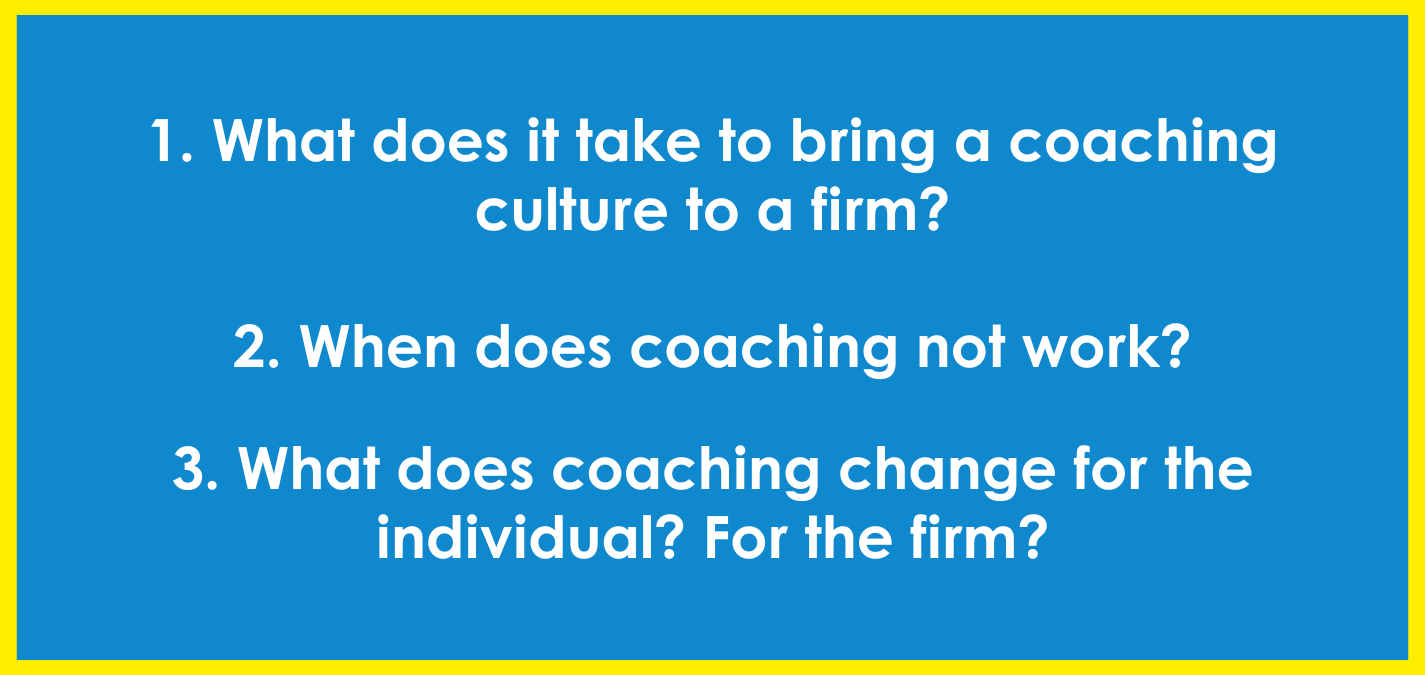
 Q: What does it take to bring a coaching culture to a firm?
 A: It takes a key leader who’s personally benefitted from coaching, not someone who thinks it’s a good idea for everyone else.
After 10 years working with accountants and leaders across the profession, we know the key is having leadership sit in the coachee seat and personally benefit from it.
Some leaders say they want it for their people because their people need it, but that won’t change the entire firm’s culture. It has to come from the top.
When a leader uses coaching to create the lifestyle they deeply want, meet their personal goals (not just professional ones) and be the leader they want, that’s when it clicks.
They access the Dimension of Possible, and they want others to realize the same benefits they’re experiencing – having the space, structure, and support to get clarity on their goals and put them into motion.
Q: When does coaching not work?
A: Coaching is like anything else – you get out what you put in. We see a gap when leaders say they want coaching for their people because their people need it, but they themselves have never been coached.
Often, leadership brings in coaching for accountants in the middle of the organization, wanting to help them perform better.
This can certainly be a great thing. However, when executive leaders focus on their people as the problem without stepping back to reflect on how their own leadership style may be contributing to the problem, they miss a huge opportunity.
We often see these leaders struggling themselves. They feel pressured, yet afraid to ask for help, which means they don’t have the capacity to develop and support the people coming up behind them.
They are just trying to survive by getting their own day-to-day work done and not thinking or acting strategically. As a result, they often put unrealistic, fear-based pressure and expectations on their teams, hoping that coaching will get more and better productivity out of their people.
If the firm’s highest leaders haven’t sat in the coachee seat, how can they model the behaviors they want to see in their people?
Yes, individual coaching is highly valuable. It can have a huge ripple effect. What it cannot do is change an entire culture – a coaching culture has to be instilled and cultivated from the top down.
Q: What does coaching change for the individual? For the firm?
A: Coaching can help someone shift from being disengaged, hopeless, stressed out, and overwhelmed, to engaged, connected, and excited to contribute.
For individuals as well as teams, coaching can create purpose, meaning, engagement, and connection. This allows them to contribute at higher levels than ever before.
Coaching gives you the space to slow down, reflect, and think about what you really want, who you want to be, and then it provides the structure, support and accountability to get you there.
With coaching, accountants find their voice and expand their influence – and then they find they want that for others at their firm.
When you use coaching to create the life you want, that’s when you realize, “If I could give this to other people, our collective performance will skyrocket.”
See you in the DOP,

P.S. Curiosity is where every coaching conversation begins. If you have a question about coaching cultures that we haven’t answered yet – or a challenge your firm is navigating – we’d love to hear it.